What Stateful Processing Actually Is
August 11, 2026
Short read: NCSC Cyber Threat Report 2025, in plain English
August 11, 2026
How Retail & E-commerce Businesses Scale Without Integration Chaos
Why You're Reading This
You're solving a specific problem today:
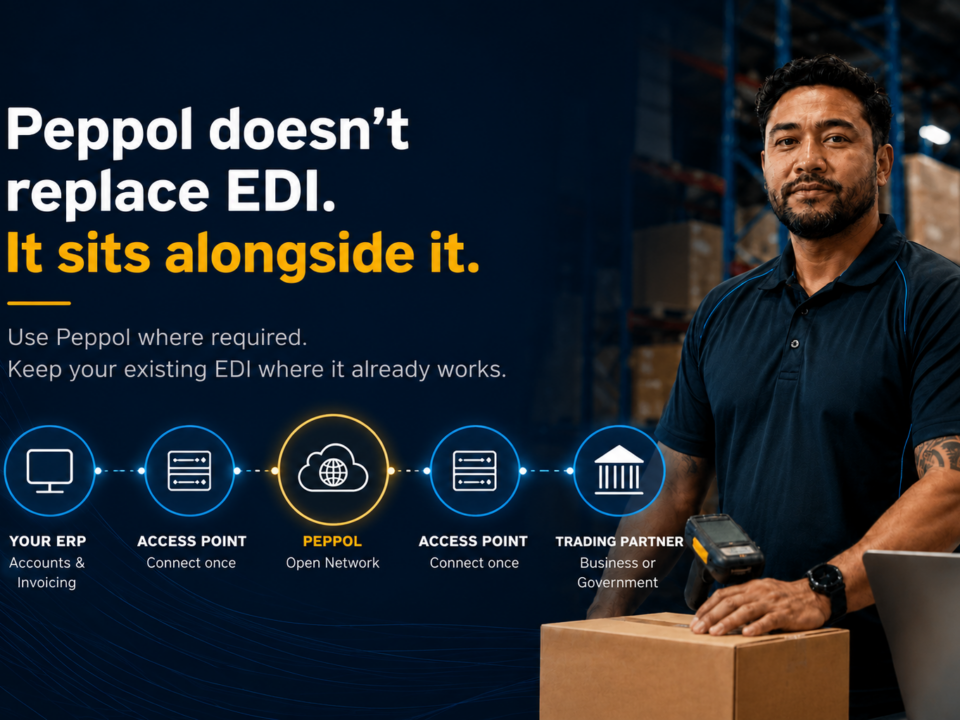
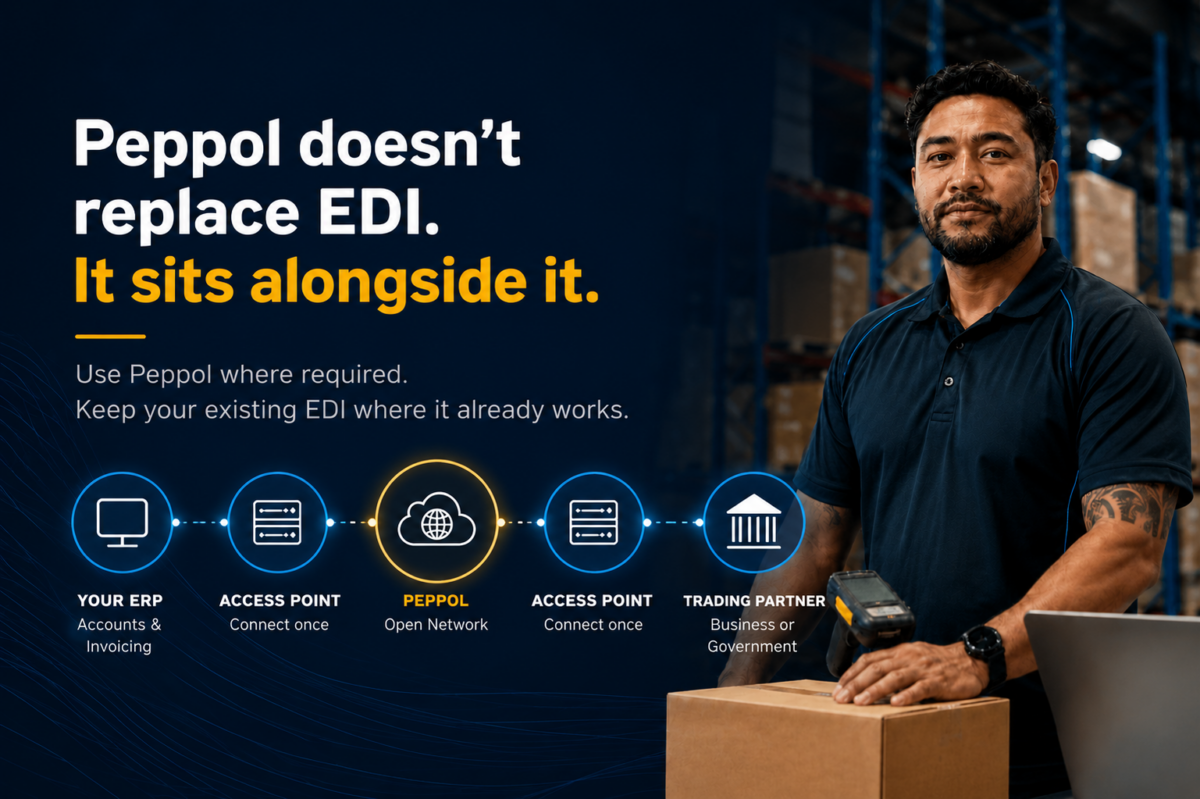
- You've landed a major retailer. Woolworths, Coles, Countdown, Foodstuffs - they all use EDI. You're googling EDI providers and need to be live in weeks, not months.
- Your ERP is holding you back. It's 10+ years old - MYOB EXO, Dynamics NAV, Pronto, maybe SAP. You're looking at NetSuite, MYOB Advanced, DEAR, or Cin7. But swapping ERPs doesn't solve your integration nightmare.
- Going multi-channel. Whether it's launching Shopify, adding marketplaces, or connecting a new POS - you need orders flowing into your WMS and accounting without manual handoffs.
- A vendor promised "easy integration." Turns out "easy" means exporting CSV files, uploading them somewhere else, and hoping nothing breaks.
You're not looking for an "integration strategy." You need to solve a business problem. Today.
Here is what you might be missing: How you solve that problem determines whether you have agility or pain for the next five years.

The Decision You're Making (Without Realising It)
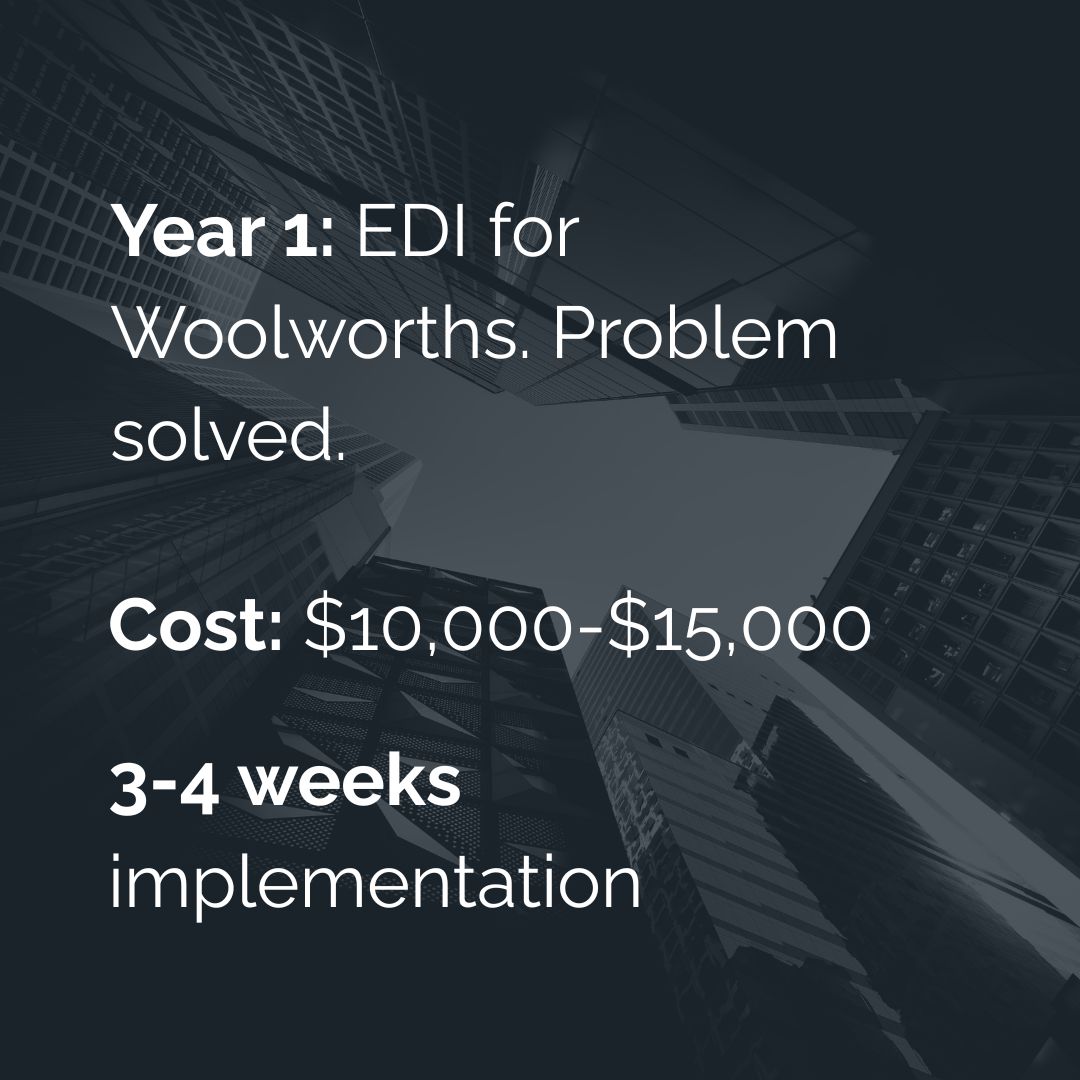
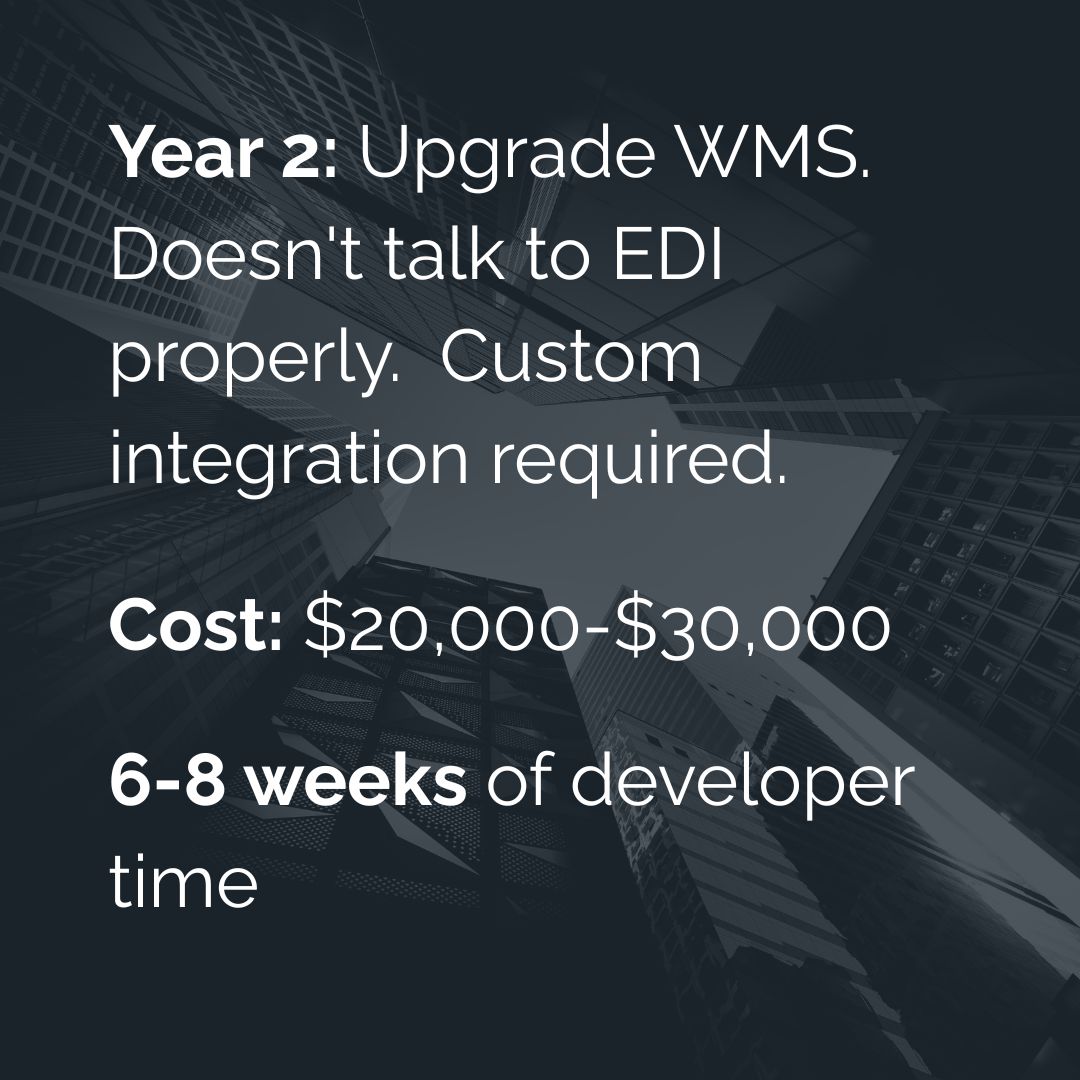
The common pattern:
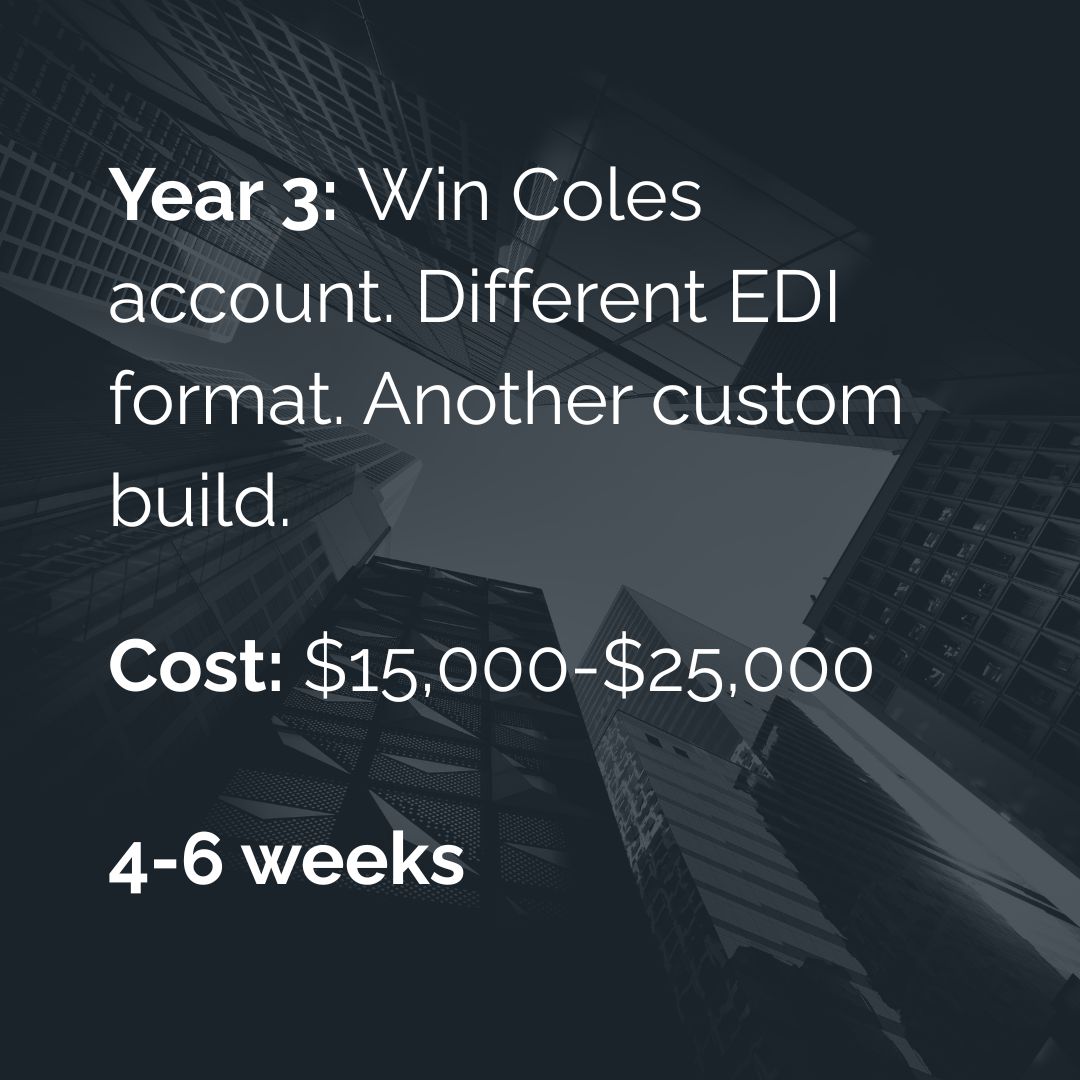

The Real Cost Over 4 Years:
- Direct integration work: $85,000-$140,000
- Hidden cost - manual labor: Your operations team spending 15-20 hours per week on manual workarounds, data reconciliation, and exception handling (valued at $90,000 - $125,000 in labor costs)
- Opportunity cost: Six months of cumulative delays. Systems that still don't talk properly. IT resources stuck firefighting instead of enabling growth.
Total impact: $175,000-$265,000+ over 4 years, plus the strategic constraint of slow partner onboarding (4-6 weeks per new retailer) limiting your ability to seize market opportunities.
That's the cost of solving today's problem without thinking about tomorrow's flexibility.

The Agility Advantage
You're not necessarily an enterprise company locked into massive ERP stacks. That's your advantage. You can choose best-in-breed:
Best e-commerce for your customers (Shopify, Magento, BigCommerce)
Best WMS for your operation (DEAR, Cin7, Peoplevox)
Best accounting for finance (Xero, MYOB, NetSuite)
Best channels for your market (Amazon, Catch, The Iconic)
And when something better comes along in 3-5 years? You can switch.
Flexibility disappears if you choose the wrong integration approach:
The question isn't whether you'll change systems. It's whether that change will be quick and affordable, or slow and expensive.


What "Good Integration Architecture" Actually Means
Point-to-Point Integration (What Most Build by Accident):
Every system connects directly to every other.
With 5 systems (ERP, WMS, Shopify, Woolworths EDI, Xero), that's 10 separate integrations.
Add Amazon and Catch? Now it's 21 integrations.
What happens:
Woolworths changes EDI format? Rebuild the connection.
Switch to BigCommerce? Rebuild 4-6 connections.
Something breaks? Good luck finding which of 21 connections failed.
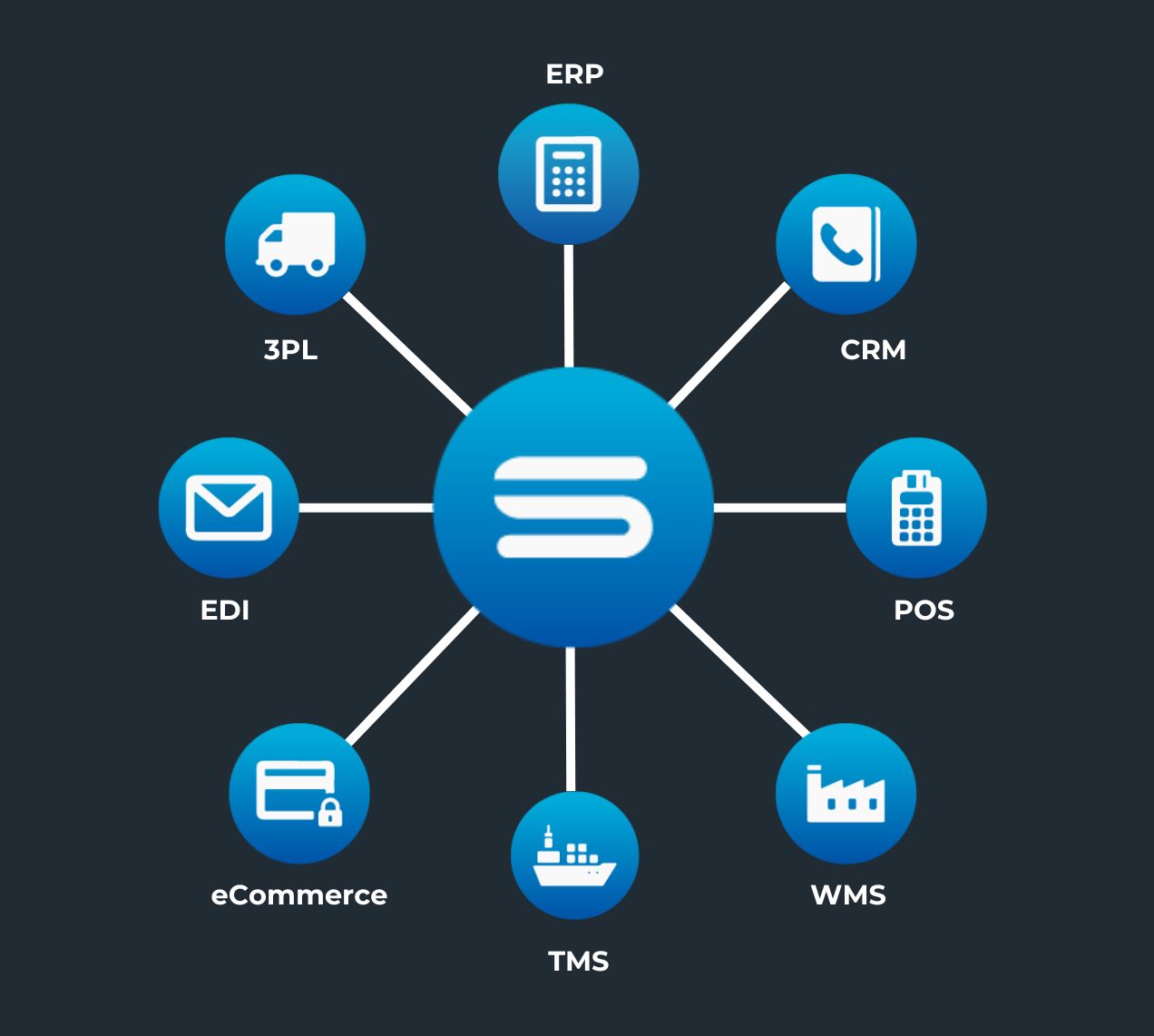
Hub-and-Spoke Integration (What Flexible Retailers Build):
- All systems connect to a central hub.
- With 5 systems, that's 5 connections.
- By your third channel, fourth trading partner, second platform upgrade, hub-and-spoke has saved you 6-12 months and $100,000-$200,000.
What happens:
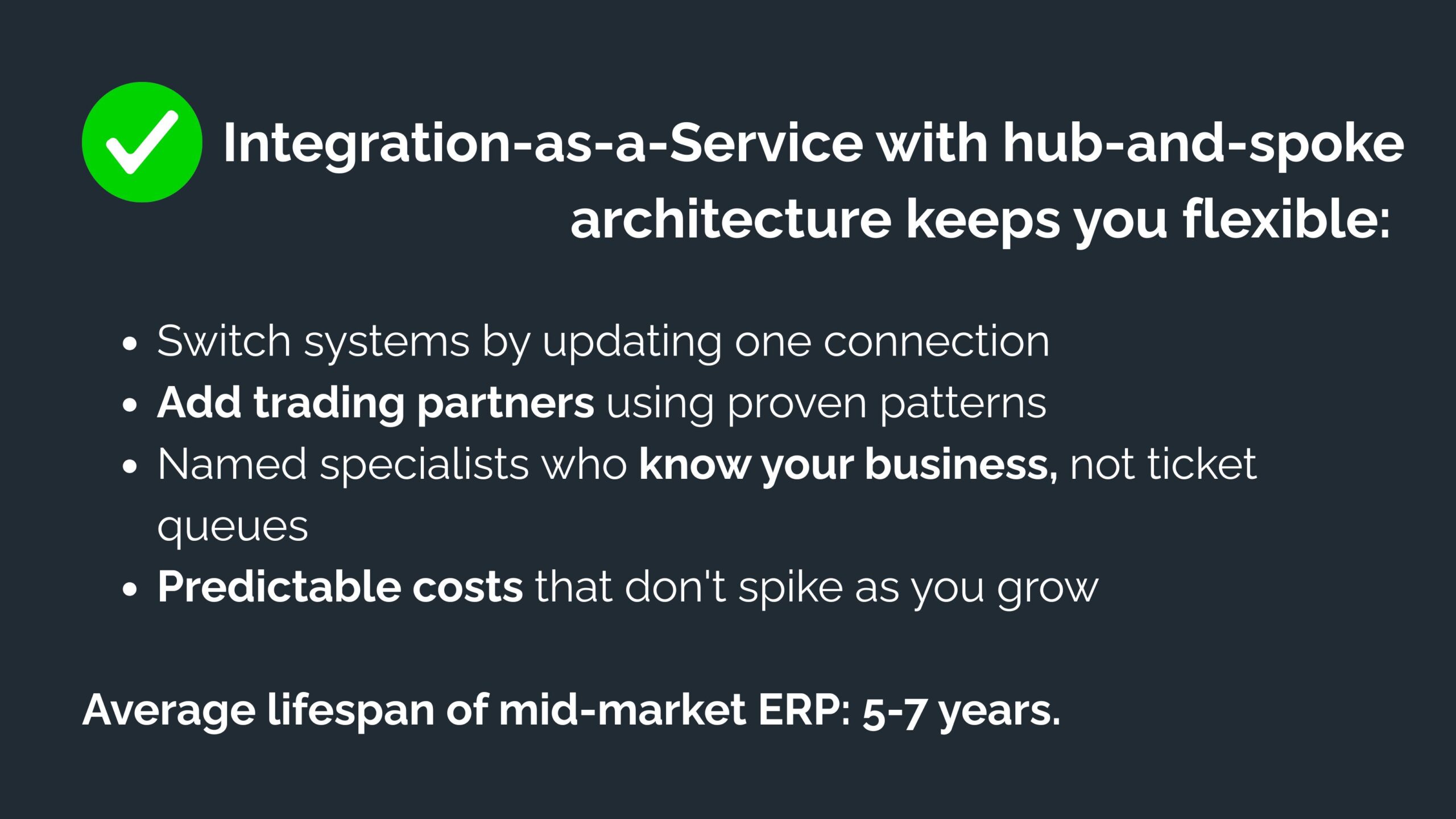
- Woolworths changes format? Update one connection at the hub.
- Switch to BigCommerce? Update one connection. Everything else keeps working.
- Something breaks? The hub tells you exactly which connection and why.
The Integration Problem (Past the First Connection):
After solving that first need, here's what actually happens:
15-20 hours per week manually transferring data between systems.
Inventory shows available, but it already committed elsewhere.
Can't answer basic questions like ‘where is my order’ without checking three systems.
Systems update and break integrations. Discover it 48 hours later when orders haven't synced.
Adding partners takes months.
Every new connection built from scratch.
Locked into current WMS because changing is too expensive.
The real cost:
$25,000-$35,000/year in wasted time per staff member
2-3% error rate from manual entry
24-48 hour delays in critical information
Lost sales from inaccurate inventory
Inability to move when opportunities arise
Integration-as-a-Service: Specialists Who Own Your Outcomes
You don't buy software and figure it out. You get specialists who own your integration outcomes.

Why "Boutique by Design" Beats Mass-Market
We're deliberately boutique. Because specialisation delivers better outcomes.
Flow serves mid-market retail, logistics, and FMCG in Australia and New Zealand. That's our focus.
What this means:
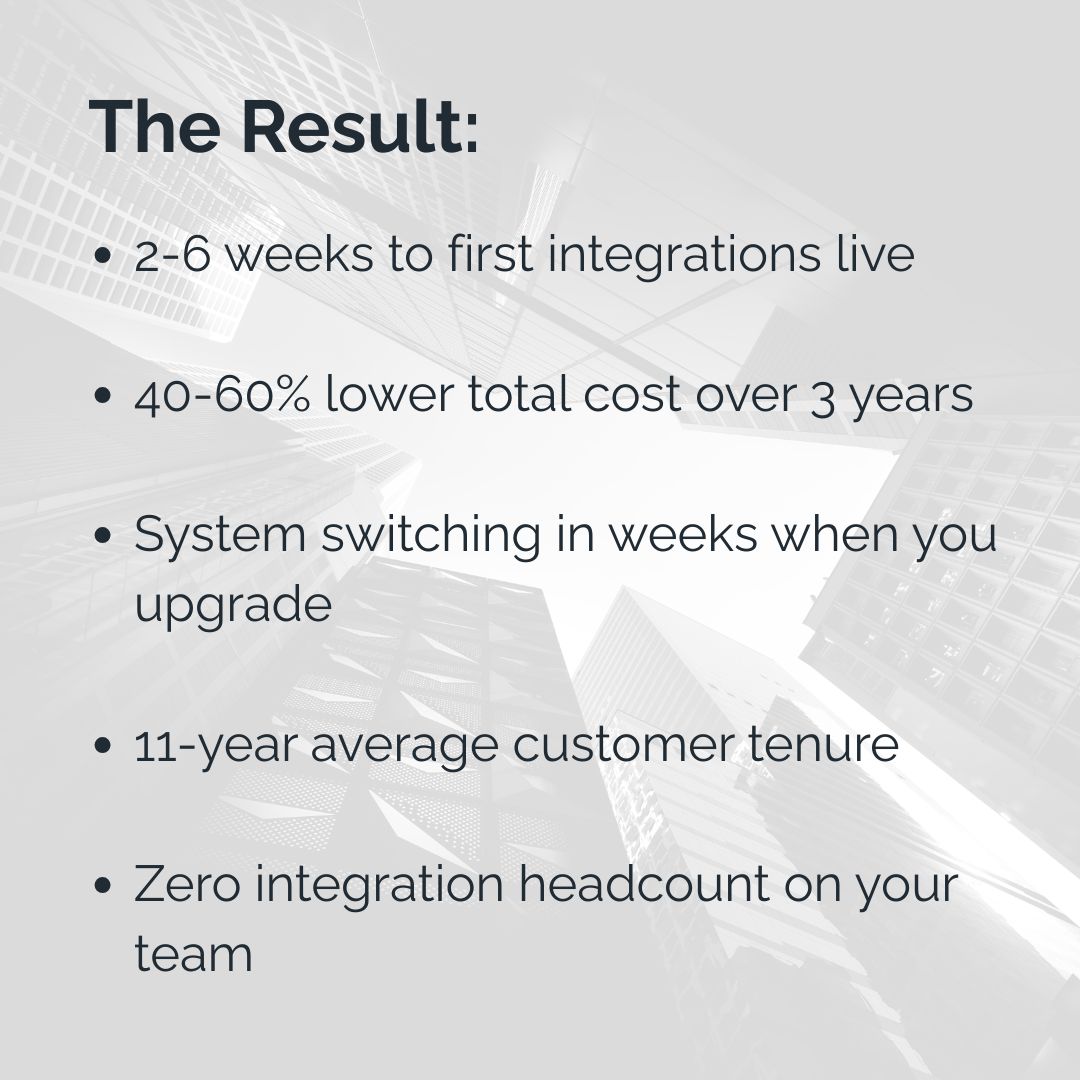
- 20 years vertical expertise: We've solved your integration challenges dozens of times
- AU/NZ market specialisation: We know your systems (DEAR, Cin7, Xero, Shopify, StarTrack), compliance requirements, local dynamics
- Named specialists, not ticket queues: Assigned team who learns your business. When you call, they have context
- Strategic advisers: "Evaluating new WMS. What's involved?" We know what works
- 11-year average tenure: They stay because it works, not because of contracts

How It Works: Run, See, Scale
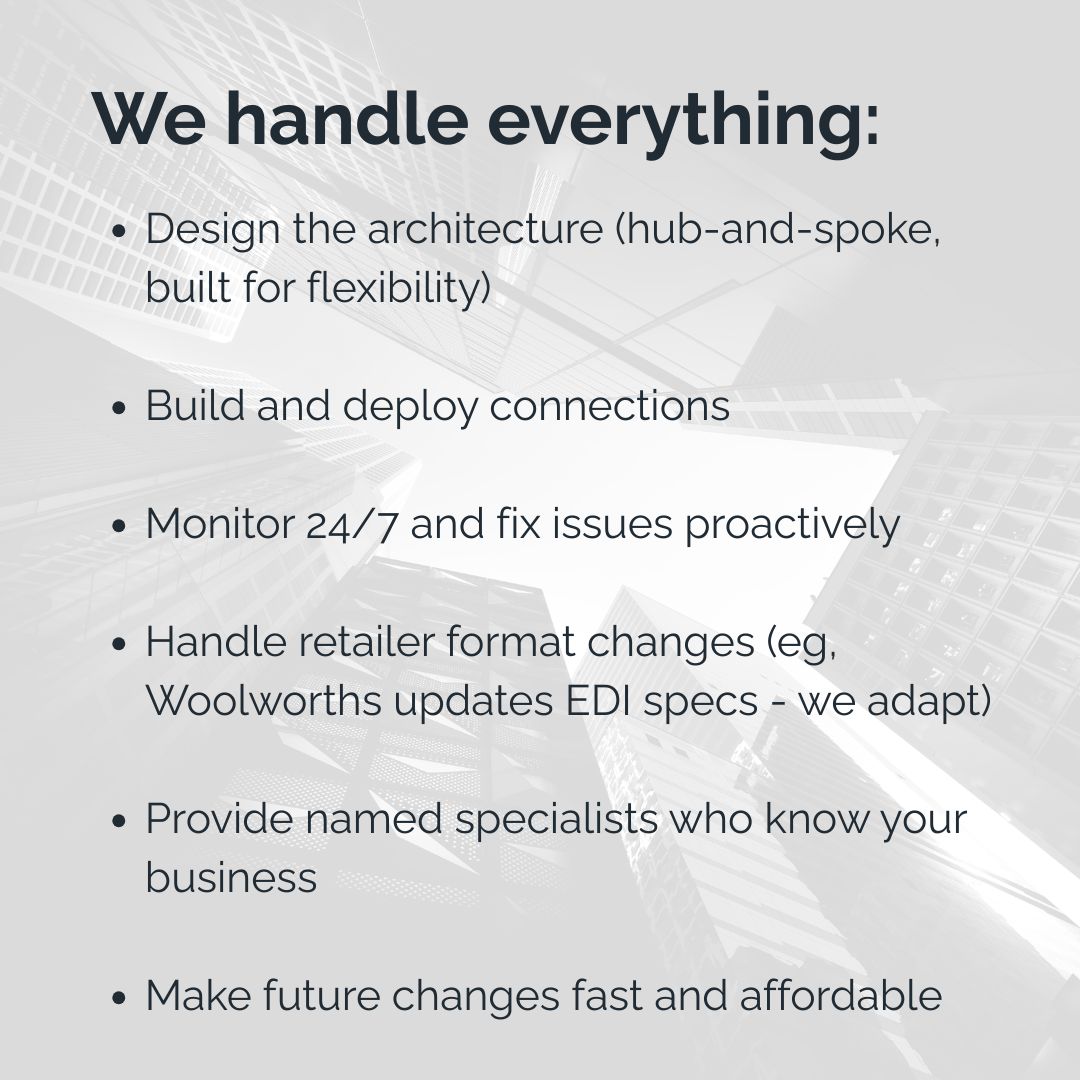
RUN: Statelake Cloud Integration Hub All systems and trading partners connect through one reliable hub. We run it. When you switch systems or add partners, you're updating one connection, not rebuilding multiple integrations.
SEE: Workspace Visibility Real-time visibility into every transaction. Customer service answers "Where's my order?" in 30 seconds instead of checking three systems.
SCALE: Assure360 Managed Service 24/7 monitoring. We respond to issues before you notice. Handle system updates. Defined SLAs. Named specialists. Included, not add-on.
Is Flow Right For Your Business?
You're Likely a Great Fit:
- Mid-market retail, e-commerce, or FMCG business in AU/NZ
- Running multiple systems that need to communicate
- Team spending significant time on manual data transfer
- Limited or stretched IT resources
- Value expertise and partnership over DIY tools
- Want flexibility to switch systems as your business evolves
When Flow Might Not Be Right:
- Need global coverage outside AU/NZ (consider enterprise iPaaS)
- Want to build integration expertise in-house (DIY platforms give you control)
Not sure? Let's talk. We're honest about where we excel and where other solutions might serve you better.