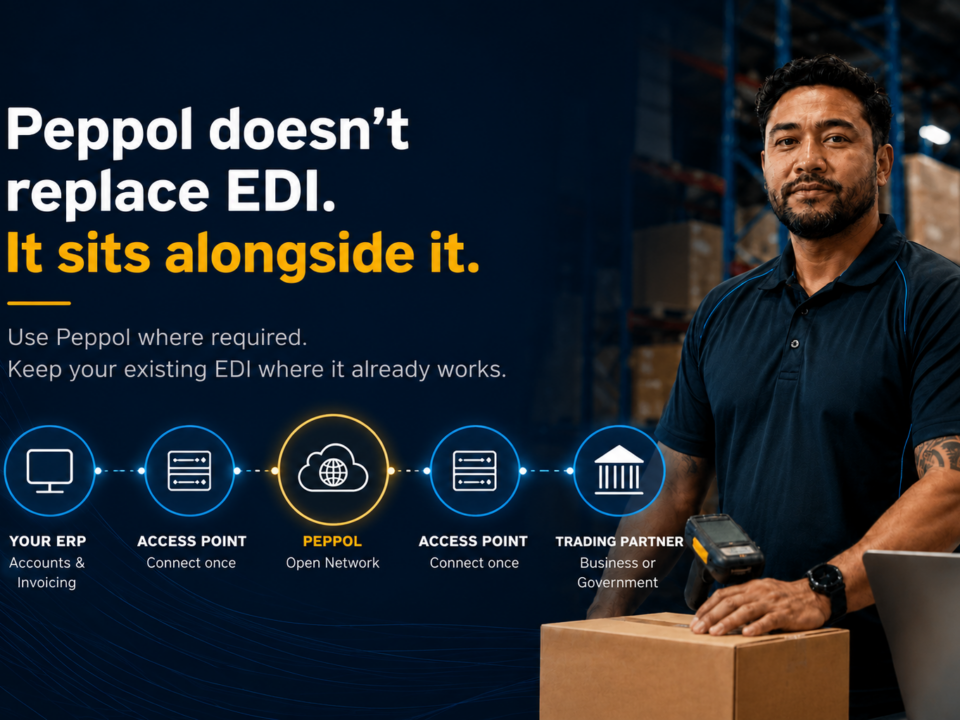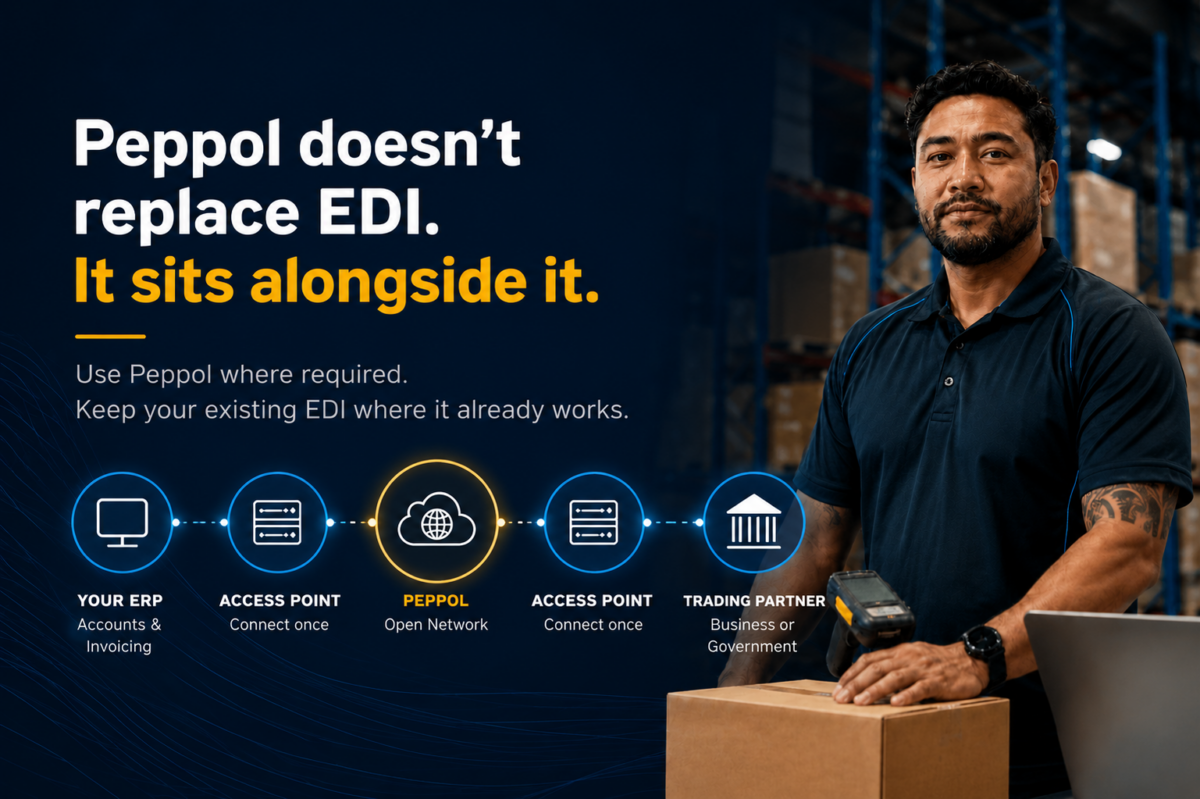
Peppol and EDI: what ANZ businesses need to know before the 2026 and 2027 deadlines
June 15, 2026
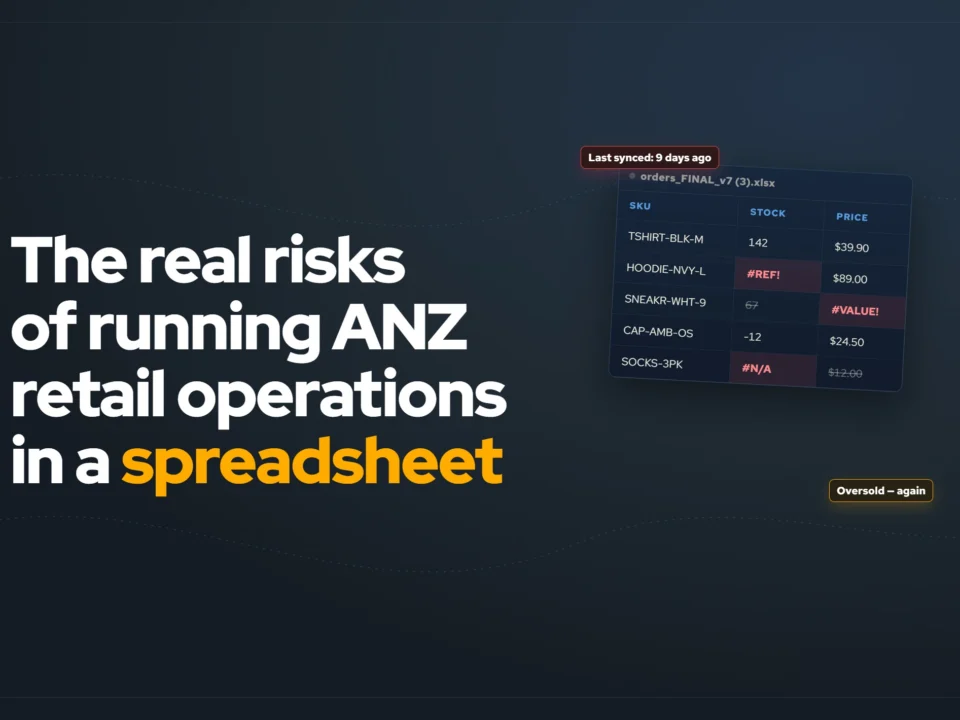
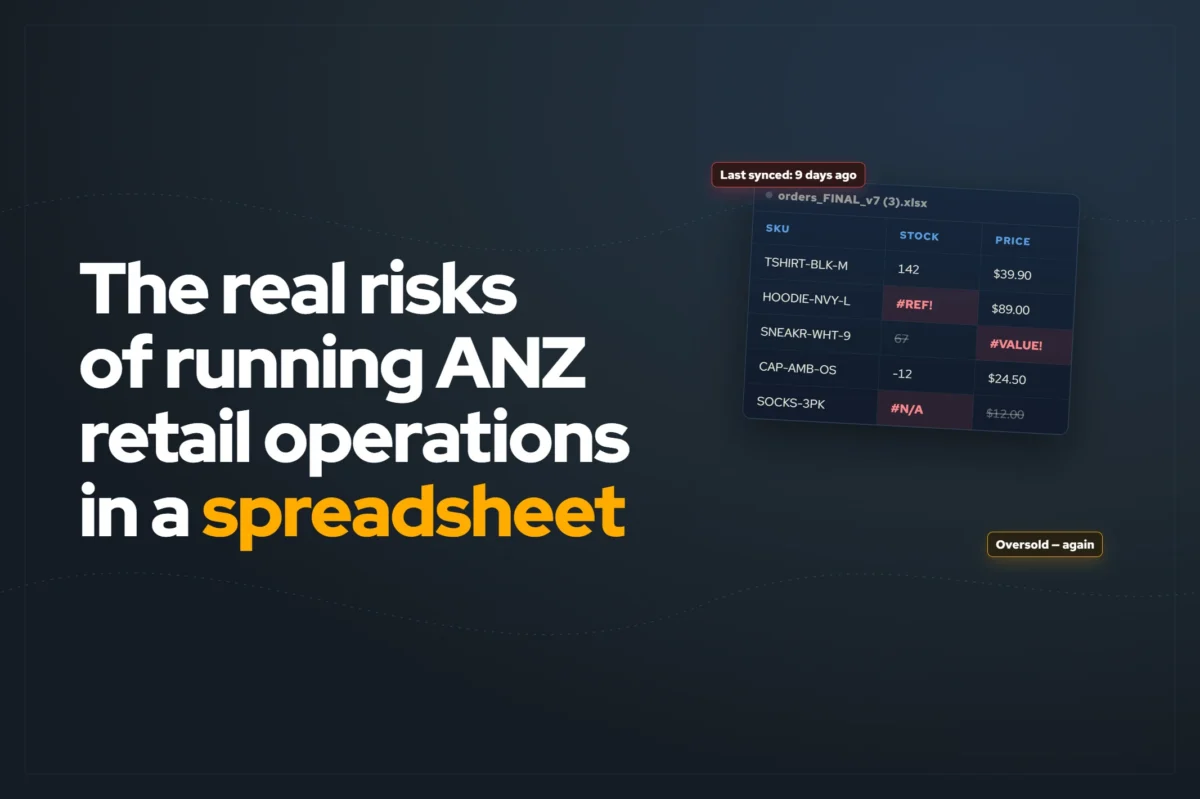
The Real Risks of Running ANZ Retail Operations in a Spreadsheet
July 15, 2026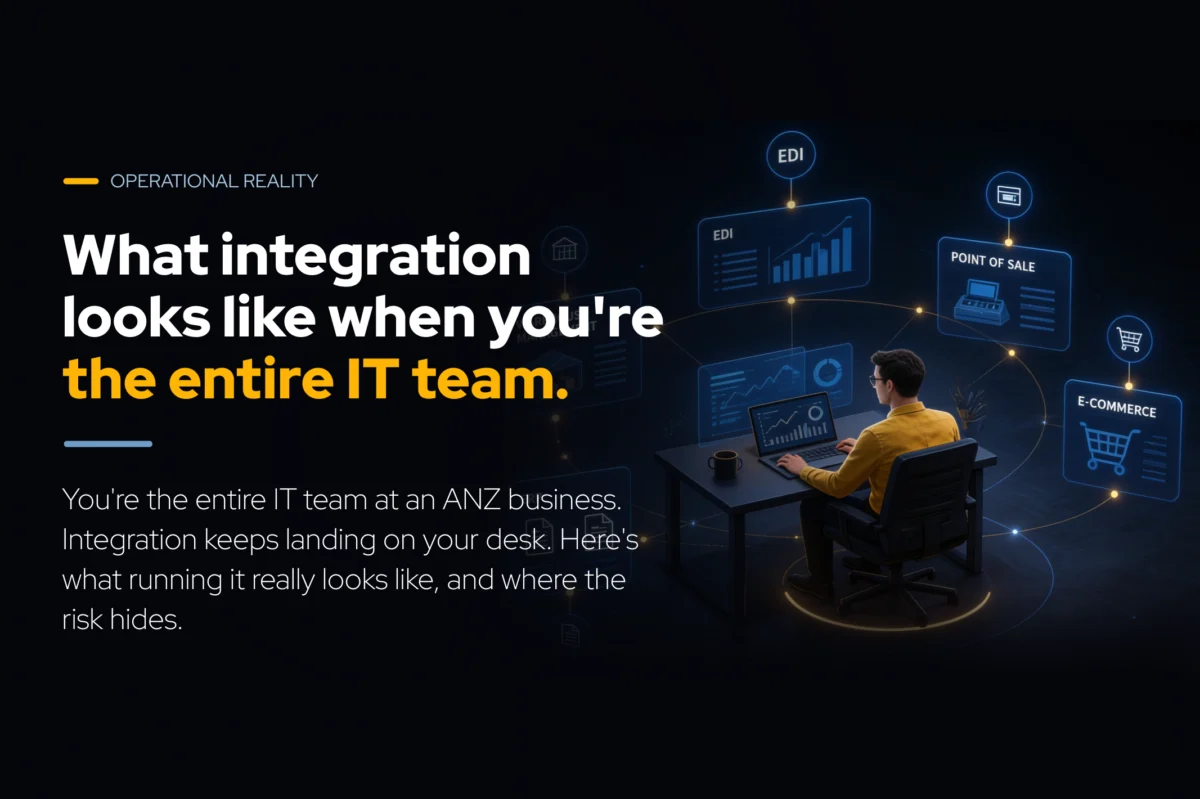
For the IT managers who are also the entire IT department…
If you’re the entire IT team at an ANZ mid-market business, you already know the feeling. The job description said “IT Manager.” What it actually means is help desk, security, hardware, the phone system, the new starter’s laptop, the printer nobody can fix, and somewhere underneath all of that, every integration the business runs on.
You didn’t choose to become the integration person. It arrived the way most of this work does: a retailer mandated EDI, then an ERP migration broke something that had been quietly working for years, and at some point, a new marketplace needed connecting. There was no one else to hand it to, so it landed on you.
This is what that actually looks like, day to day. It’s worth being honest about where the risk hides, because in a one-person IT team, the risk isn’t the part you can see. It’s the part nobody is watching.
You’re not running integration. You’re holding it together.
There’s a difference between running integrations and keeping them from falling over, and most one-person IT teams are doing the second thing.
Running integration means you have time to monitor it, document it, improve it, and plan for what breaks next. Holding it together means you find out something failed only when the problem reaches you:
- An angry email arrives from the warehouse.
- A buyer at Woolworths flags a missing ASN.
- Finance can’t reconcile an invoice that should have matched a purchase order three days ago.
The work is reactive by necessity. You’re not short on skill. You’re short on hours. When you’re the only person, every integration competes for attention with every other thing on your plate, and integration usually loses, right up until the moment it breaks loudly enough to jump the queue.
That’s not a failure of effort. It’s arithmetic. One person cannot watch a dozen data flows around the clock while also resetting passwords and standing up a new finance laptop.
The map lives in one head. Yours.
Here’s the part that keeps one-person IT teams up at night, even if they don’t say it out loud.
You know how the integrations work. You know the Coles connection has a quirk in how it handles backorders. You know the mapping between your ERP and your WMS has a workaround in it from two years ago that nobody documented. You know which feed is fragile and which retailer changes their spec without much warning.
All of that knowledge lives in one place. Your head.
There’s no runbook. There’s no second person who could pick it up. If you’re on leave, off sick, or you take another job, that knowledge walks out the door with you. The business doesn’t have an integration capability. It has you, and a set of connections that only make sense to you.
For a 50 to 500 person business selling into major ANZ retailers, that’s a single point of failure sitting right in the middle of the operation. It’s the kind of risk that stays invisible until the day it isn’t.
Every change is a small emergency
When you’re the entire IT team, change is the enemy of a quiet week. The normal rhythm of a growing ANZ business keeps producing it:
- A retailer updates their EDI spec. Now you’re deciphering a new message implementation guide between everything else you’re meant to be doing.
- The ERP vendor pushes an update. A field mapping shifts, an integration that worked yesterday silently stops working today, and you won’t know until the data stops arriving.
- The business adds a marketplace or a new 3PL. You’re the one who has to make it talk to the systems that are already there.
None of these are unreasonable requests. But each one is a project, and you don’t have project time. You have whatever’s left over after the day job, which is usually nothing.
So changes get done late at night, over weekends, or they get pushed back until a retailer deadline forces the issue. Work done under that kind of pressure is exactly the work most likely to introduce the next silent failure.
“Easy integration” was never easy
You’ve probably been sold “easy integration” before. A vendor promised plug-and-play. What it turned out to mean was exporting CSV files, uploading them somewhere else, and hoping nothing broke in between.
Or you built point-to-point connections, each system wired directly to the next. It worked, for a while. Then you added a marketplace and a second retailer, and the connections multiplied faster than anyone expected:
- Five systems is ten connections.
- Add two more channels and it’s twenty-one.
- When something changes anywhere in that web, you don’t get told which connection broke. You go looking. As the only person who understands that web, that hunt is yours alone.
The honest question isn’t “can you cope”. It’s “should you have to”.
Most one-person IT teams cope. That’s the problem. Coping looks like everything is fine, right up until the person doing the coping is unavailable, the business grows past what one set of hands can hold, or a retailer deadline collides with a feed failure on the same week.
The real question for an ANZ mid-market business isn’t whether the IT team can keep the integrations running. It’s whether the integrations should depend on one person at all.
This is where Integration-as-a-Service changes the equation. Not by selling you another platform to run, because you don’t have time to run another platform. By taking the integrations off your plate entirely:
- The connections run on the infrastructure we operate.
- They’re monitored, so failures get caught and worked on before it reaches the warehouse, the buyer, or finance.
- When a retailer changes a spec, someone whose whole job is integration handles it.
- When you go on leave, the integrations don’t go with you.
You stay the IT team. You get the integration burden, the on-call, the firefighting, and the undocumented knowledge sitting in one head, taken off it.
That’s the difference between holding it together and having it run.
You don’t have to carry this one alone
If you’re the entire IT team at an ANZ retail, logistics, or FMCG business, integration was never meant to be the thing that consumes your week or keeps you tethered to your laptop on holiday.
Flow runs integrations for ANZ mid-market businesses exactly like yours: retail suppliers selling into Woolworths, Coles, and Foodstuffs, logistics operators scaling their partner networks, and FMCG manufacturers connecting ERP to trading partners.
We’ve done it for 20+ years, with an 11-year average partnership. The difference isn’t a bigger platform. It’s a partner who fits how your business runs, instead of tech you have to work around.
We run it. You run the rest of IT, and the rest of your life.