Peppol and EDI: what ANZ businesses need to know before the 2026 and 2027 deadlines
August 11, 2026
Exa Capital Named to the Inc. 5000 List for the Second Consecutive Year
August 20, 2026
For retail brands adding channels three, four and five.
The Shopify store works. Orders come in, stock goes out, everyone knows the routine. Then someone says the word Amazon, and it makes sense, because your competitors and customers are already there. Then eBay. Then Kogan. Then Trade Me, because New Zealand is sitting right there.
Every yes is potential revenue. Every yes is also a new set of connections, and this is the marketplace integration work the onboarding guides skip. Opening another marketplace channel is often the straightforward part. Running five channels against one warehouse, one stock file and one finance system is where ANZ retail brands actually come unstuck.
Every channel is another version of the truth
One product, five places it’s for sale, one physical unit on the shelf. The moment stock levels live separately in Shopify, Amazon Seller Central, eBay, Kogan and Trade Me, you don’t have five channels. You have five versions of the truth, drifting apart between manual updates.
The failure has a name every multichannel operator learns eventually: the oversell. Two channels sell the same last unit within minutes of each other. Now you’re cancelling someone’s order, and the marketplace is recording that cancellation against you.
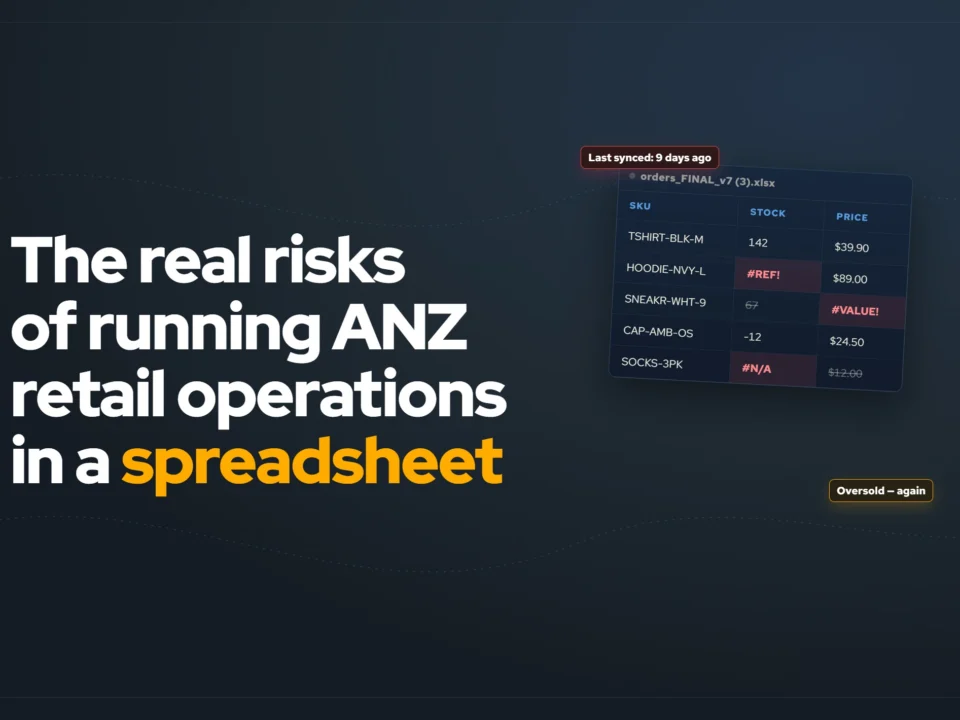
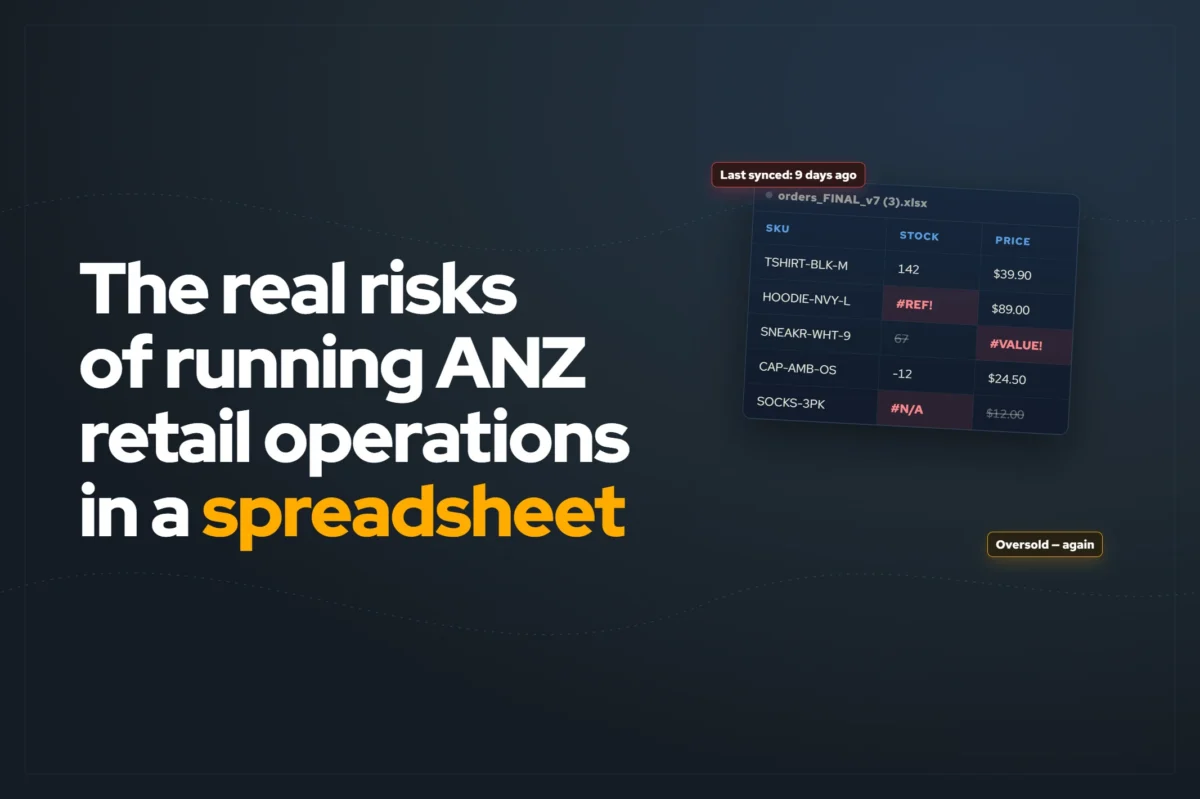
This is usually the moment a brand goes shopping for inventory management software. Fair enough, and often needed. But the software is only half the answer. The other half is the connections: how fast a sale on one channel updates stock on the other four, and whether anything is watching when that update fails. An inventory system fed by manual uploads is a spreadsheet with better branding. It carries the risks of running retail operations in a spreadsheet.
The order doesn’t end at the marketplace
Winning the sale is the marketplace’s job. Everything after that is yours:
- The order has to reach your ERP without being rekeyed.
- The pick has to reach your warehouse or 3PL, whether that’s your own shed or a fulfilment partner, with freight booked through logistics providers like Mainfreight or Linfox.
- Tracking has to flow back to the channel that sold it, because marketplaces measure you on it.
That last point matters more than most brands expect. Amazon Seller Central holds sellers to performance thresholds on late shipment rate, cancellations and valid tracking. Fall outside them consistently and seller-fulfilled offers or listings can be deactivated or suspended, in the middle of your best trading month. The marketplace doesn’t care that the delay was a CSV upload someone forgot. To sell on Amazon Australia at any volume is to be measured on the reliability of your back office, in public.
This is why warehouse and 3PL integration sits at the centre of most multichannel operations. Whether you fulfil in-house or through a partner, the question is the same: how well does it connect to what you already run? The systems stitching channels to ERP to warehouse only earn their keep if every connection in the chain is live, mapped correctly, and monitored.
The maths gets worse with every yes
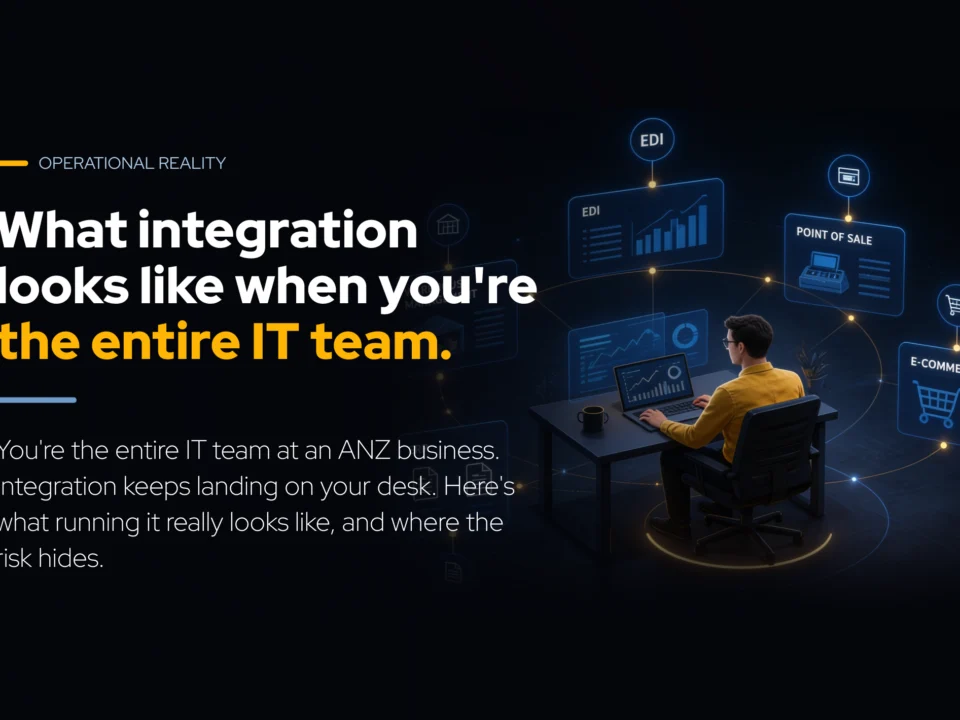
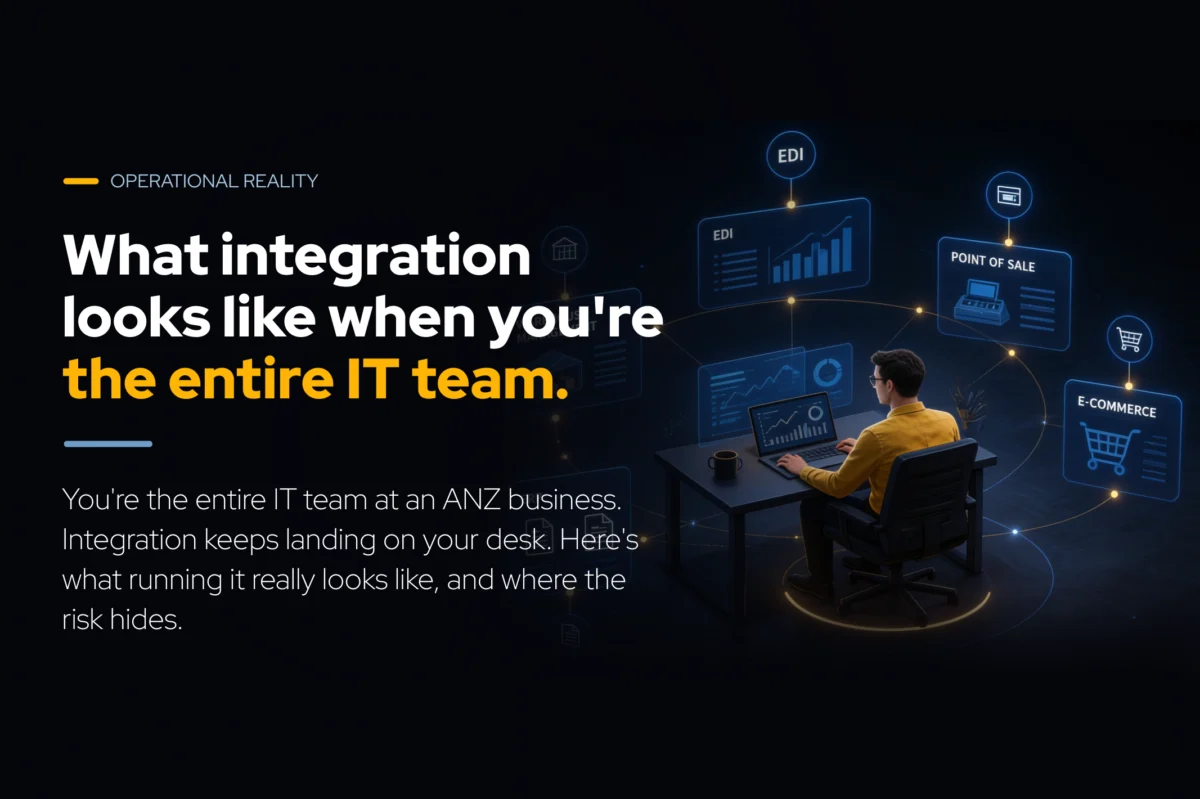
Point-to-point, five channels talking to an ERP, a 3PL and a finance system is a web of connections that grows faster than the team maintaining it. Usually that team is one person, fitting integration around an actual day job. What does that look like from the inside?
There’s a common pattern across ANZ retail brands. Each channel was added quickly to catch the revenue. Each connection was built its own way. Nobody planned for the setup they ended up with. It works, mostly. Then a marketplace changes an API version, or the ERP updates, and the person who built that particular connection left last year. How do you scale on that? You don’t. The Operator’s Guide to Integration walks through choosing an approach that holds.
What good marketplace integration looks like
The brands that run multichannel well share one structure. Every channel connects to a single integration layer, one system holds the authoritative stock position (for some businesses the ERP, for others an OMS or WMS), and orders, inventory and tracking flow through mapped, monitored connections rather than manual uploads.
One Australian homewares brand runs exactly this shape with Flow: ERP, 3PL and sales channels connected through one platform, trading across multiple marketplaces and their own website. Adding channels isn’t the hard part. The hard part is that every one of those connections keeps working, through API changes, spec updates and peak trading, without a team of integration specialists on payroll.
That’s the part Flow runs. We build the connections between your channels, your ERP and your 3PL, then we operate them. The integrations are:
- Monitored, with failures alerted
- Exceptions worked by our team
- Changes coordinated when a marketplace or system updates
Expansion becomes a commercial decision again, instead of an integration project you’re not resourced for.
Before the next channel goes live
If a new marketplace is on your roadmap this year, three questions worth answering first.
Where does stock truth live?
What happens to an order between the channel and the warehouse?
And who finds out when a connection fails?
If any answer involves a person, a spreadsheet and hope, that’s the work to do before the listing goes up. It’s the work we run: Integration-as-a-Service for ANZ.