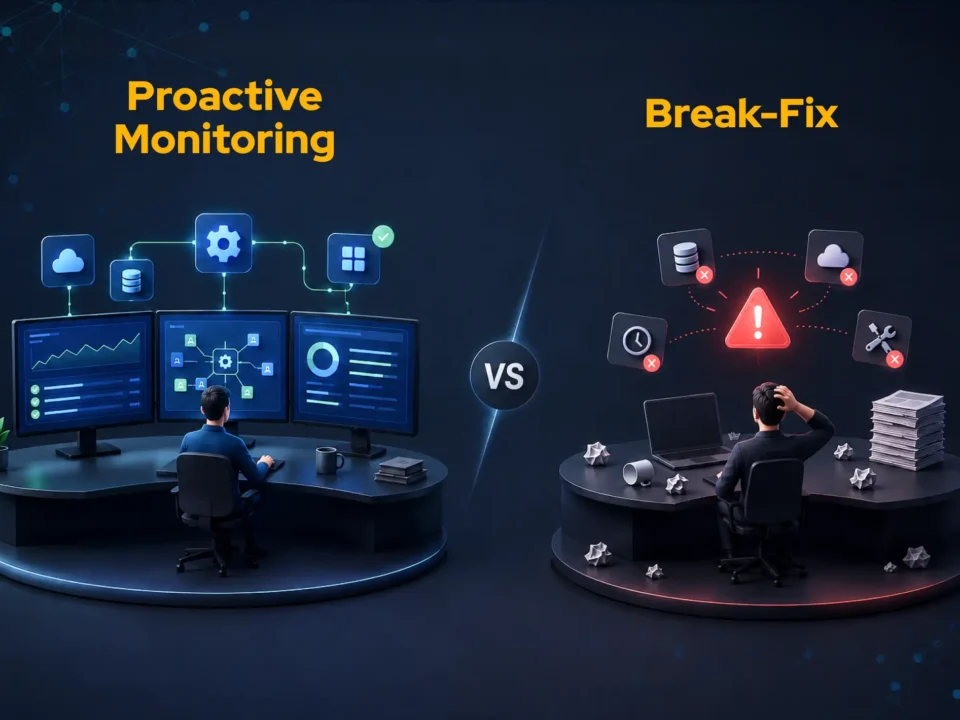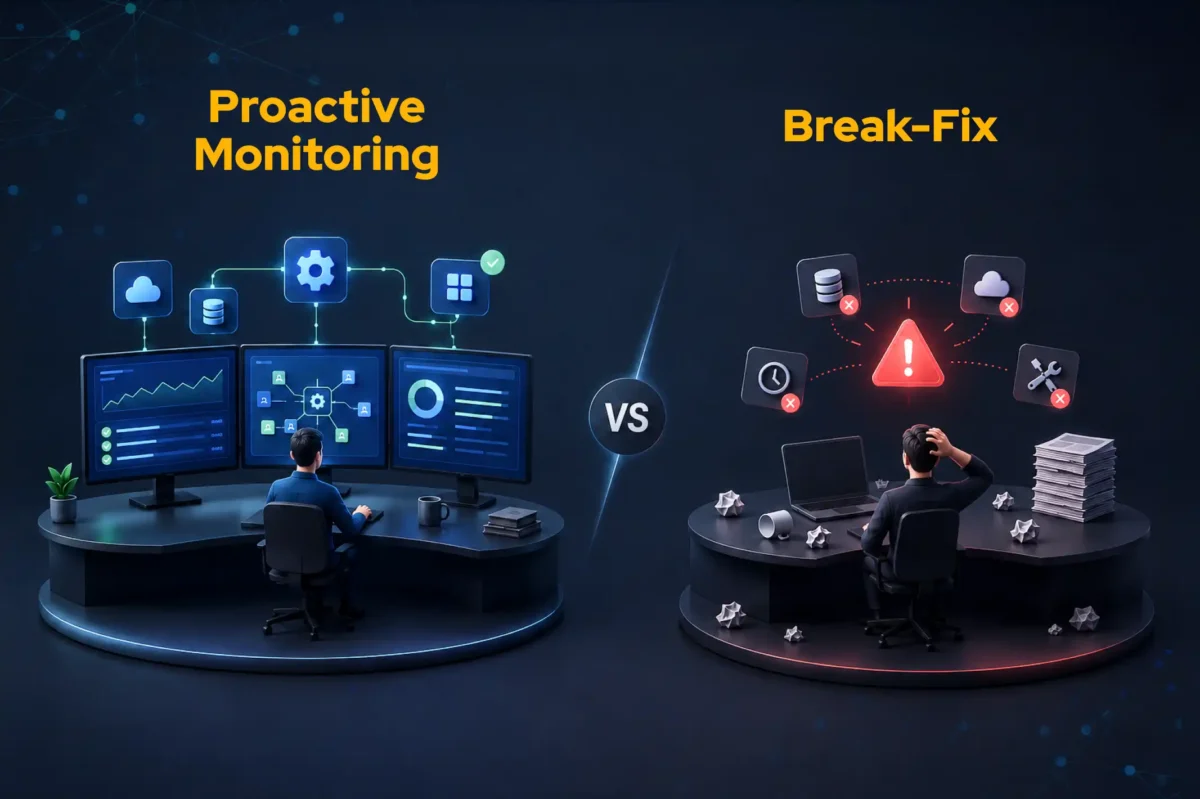
Proactive Monitoring vs Break-Fix What Running an Integration Actually Looks Like
August 24, 2026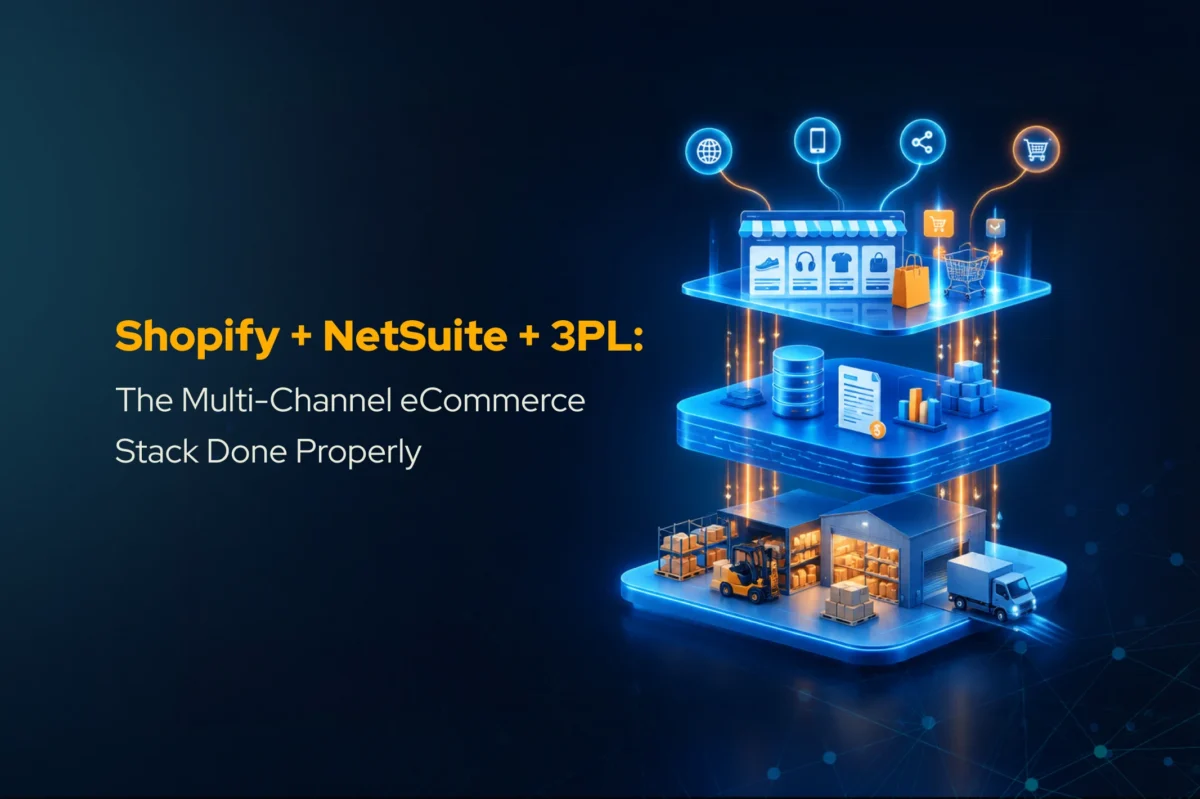
For the operations leads whose stack grew faster than the plan.
Shopify on the front. NetSuite running the books and inventory. A 3PL shipping the orders. On paper, this is a common multi-channel eCommerce stack for growing ANZ product businesses, and for good reason: each system is strong at its job.
The problem is the space between them.
A Shopify NetSuite integration often starts as a connector, an app, or a custom script that someone built to move orders across. It works on day one. Then the business grows, adds a second channel, onboards a marketplace, switches carriers, and as the stack grows, point-to-point connections can become harder to monitor and maintain.
This is what the multi-channel ecommerce stack looks like when it’s running properly, and where ANZ operators actually come unstuck.
The order gap
An order placed on Shopify has to reach NetSuite as a sales order, correctly, without being rekeyed. That sounds simple until you count what has to match: the SKU mapping, the pricing tier, the tax treatment, the shipping method, the customer record. Get one wrong and it’s either a manual fix in NetSuite or an invoice that doesn’t reconcile at month-end.
At low volume, someone catches the mismatches. As volumes grow, manual reconciliation becomes harder to sustain, and most ANZ mid-market businesses don’t have the headcount to keep up. We wrote about what that looks like for the person carrying it.
Now multiply by channels. A Shopify storefront plus Amazon AU plus eBay plus Kogan plus Trade Me is five sets of order formats, five sets of rules, and one NetSuite instance that needs all of them to arrive clean. That’s the marketplace integration challenge compressed into a single afternoon.
The inventory gap
Stock truth has to live in one place, and in this stack that place is NetSuite. Every sale on every channel has to update the available quantity everywhere else, quickly enough to prevent the oversell.
When inventory updates lag across channels, two channels can sell the same limited stock before availability is updated. The cancellation hits the marketplace scorecard, the customer gets an apology, and the algorithm quietly pushes the listing down.
Some connector-based integrations sync inventory on a schedule rather than per transaction. Scheduled intervals work at modest volume. During peak trading, even short sync delays can materially increase oversell risk. An inventory system fed by delayed updates is a spreadsheet with better branding.
The 3PL gap nobody plans for
Here’s where the ANZ stack gains a layer most connector apps never anticipated.
A Shopify-native brand shipping from its own warehouse can use Shopify’s fulfilment flow. The moment a 3PL enters the picture, the order has to leave NetSuite as a fulfilment request, reach the 3PL’s WMS in their format, and the tracking, despatch confirmation, and sometimes the ASN have to flow back through the chain to every channel that sold the item.
In ANZ, the 3PL might be a carrier such as Mainfreight, a StarTrack or Australia Post arrangement, or a specialist fulfilment house. Each has its own system, its own data format, and its own onboarding timeline. The ecommerce integration between Shopify and NetSuite was the project everyone budgeted for. The 3PL integration is the one that arrives six months later as an emergency.
And if the business supplies retailers alongside DTC, the same stack is now carrying EDI connections to Woolworths, Coles or Foodstuffs, each with their own message specs. The shopping cart and the purchase order both end up in NetSuite. They just arrived by completely different roads, and both need to leave as compliant documents.
What “done properly” looks like
One scalable approach is to use a single integration hub between Shopify, NetSuite, the 3PL and other channels.
The difference isn’t more connectors. It’s that every connection runs through one place:
- An order from any channel reaches NetSuite in the same clean format, mapped once, not per-channel.
- Inventory updates from NetSuite propagate to every sales channel through one sync, not five separate scripts.
- The 3PL receives and returns fulfilment data through a mapped, monitored connection, not a CSV upload someone remembers to send.
- When NetSuite pushes a release (twice a year, whether you’re ready or not), one side of each flow gets retested. A hub architecture can reduce the number of connections that need to be changed or retested when one system changes.
That last point matters more than most operators expect. NetSuite’s twice-yearly forced release cycle means every custom integration is a candidate for silent breakage on a schedule Oracle sets, not yours. A hub architecture absorbs that change in one place. Point-to-point scripts absorb it everywhere, all at once, usually discovered by the warehouse.
Before you add the next channel
If you’re running Shopify and NetSuite today and the stack is about to gain a 3PL, a marketplace, or a retailer connection, three questions decide whether the next six months are calm or chaotic:
- Where does stock truth live, and how fast does a sale update it everywhere?
- What happens to a fulfilment request between NetSuite and the 3PL, and who knows when it fails?
- And who retests the flows when NetSuite’s next release lands?
If any answer involves one person, a spreadsheet, or hope, that’s the integration work to scope before the new channel goes live. The Operator’s Guide to Integration walks through the decision honestly.
Flow builds and runs the integrations between Shopify, NetSuite, 3PLs, marketplaces and trading partners for ANZ product businesses. We run your integrations. You run your business.